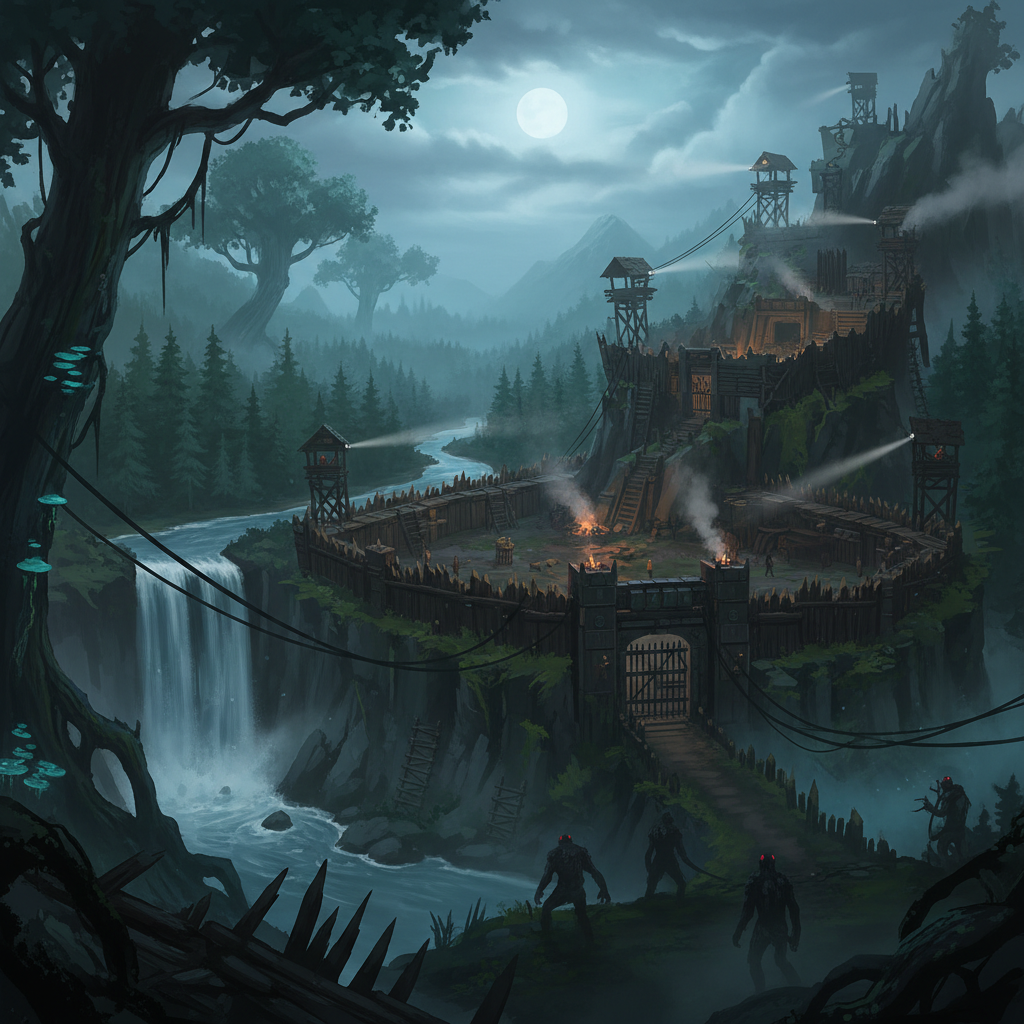
Building the perfect base in Sons of the Forest demands a strategic combination of optimal location selection and robust defensive strategies. The most effective approach involves choosing a naturally defensible site, such as the Winter-Proof River Peninsula (Coordinates: 1089, 1234), and then implementing a multi-layered defense using high-durability materials and strategic trap placements.
Strategic Location Selection
Selecting the right location is paramount for base longevity, as it dictates both resource accessibility and inherent defensibility. Key criteria include proximity to fresh water, trees, and stone, balanced against natural defensive features like cliffs, narrow passages, or water bodies. Environmental factors such as seasonal changes and visibility lines also play a crucial role, as does assessing the distance from cannibal patrol routes and mutant spawning areas. Locations that remain viable through winter are highly desirable, especially those offering water defense that doesn’t freeze.
Several proven locations offer significant advantages:
| Location Type | Coordinates | Key Advantages | Seasonal Rating | Multiplayer Score |
|---|---|---|---|---|
| Winter-Proof River Peninsula | 1089, 1234 | Year-round water defense (never freezes), excellent fishing, natural choke point, elevated ground for core structures. | 10/10 | 7/10 |
| Clifftop Bunker Proximity | 1245, 987 | Story progression access, natural elevation defense, 3D printer proximity, excellent visibility. | 8/10 | 6/10 |
| Island Fortress Central | 876, 1357 | Complete water isolation, year-round security (ice too thin for weight), spacious building area, central map access. | 10/10 | 9/10 |
The Winter-Proof River Peninsula, for instance, provides consistent water defense due to underground thermal activity, ensuring it never freezes. Its narrow land bridge creates an ideal choke point for defenses, and elevated ground at its center offers good drainage and defensive positioning. While it has limited expansion space, its year-round safety is a significant advantage. The Clifftop Bunker Proximity offers natural elevation defense, making vertical assaults difficult for cannibals, and grants access to critical story items and a 3D printer. However, log transport can be challenging, often requiring zip lines. The Island Fortress Central provides maximum security due to deep water isolation, which remains effective even when winter ice forms. This location is spacious and centrally located, though efficient mainland access requires a well-designed zip line network.
Advanced Construction Techniques
Effective base construction goes beyond simple walls, utilizing a hierarchy of materials and specialized building methods to create an impregnable fortress. Material choice directly impacts durability, build speed, and defensive value.
| Material Type | Durability | Build Speed | Defense Value | Best Uses |
|---|---|---|---|---|
| Sticks & Leaves | Very Low | Very Fast | 1 | Temporary shelters, quick barriers |
| Logs (Basic) | Low | Fast | 3 | Early game structures, basic walls |
| Stone Foundations | Medium | Slow | 5 | Permanent bases, defensive cores |
| Reinforced Logs | High | Medium | 7 | Defensive walls, main structures |
| Stone Walls | Very High | Very Slow | 9 | Fortress construction, ultimate defense |
| Metal Reinforcements | Extreme | Extremely Slow | 12 | End-game fortifications, boss defense |
For early game, basic logs suffice for initial walls, but transitioning to stone foundations and reinforced logs is crucial for main structures. Stone walls offer nearly indestructible late-game fortification, while metal reinforcements provide extreme durability for end-game boss defenses.
Beyond material choice, specialized construction methods enhance base resilience. Compound designs incorporate multi-layered bases with inner sanctums and kill zones, providing fallback positions. Elevated structures like tree houses or cliffside platforms offer tactical advantages and improved visibility. Underground bunkers can serve as hidden shelters, emergency exits, or secure storage. Strategic defensive geometry, such as star forts and killing corridors, can force enemies into advantageous firing zones.
Mastering Defensive Structures and Traps
A well-defended base integrates a variety of wall systems, secure entry points, and both passive and active defense mechanisms. Wall systems range from basic palisade walls for early perimeter defense to nearly indestructible stone walls and extreme durability reinforced walls for late-game. Defensive berms, which are earthworks and terrain modifications, can also provide natural protection.
Gate and entry design is critical for controlling access. Simple wood gates offer basic access but are easily broken. Reinforced log gates provide moderate defense and can be locked. Stone arch gates offer strong defense, while metal portcullises provide extreme defense with mechanical operation. Hidden entrances can offer concealed access, often integrated with traps.
Trap systems are essential for both deterring and damaging attackers:
| Trap Type | Primary Function | Damage/Effect | Resource Cost |
|---|---|---|---|
| Basic Snares | Individual enemy immobilization | Low | Low |
| Deadfall Traps | High damage, area effect, triggered by tripwires | High | Medium |
| Fire Traps | Causes panic, area denial, flaming barriers | Medium | Medium |
| Explosive Traps | Devastating area damage (grenades, mines, timed explosives) | Very High | High |
Passive traps like basic snares are easily reset and cost few resources. Deadfall traps deliver high damage over an area when triggered by tripwires. Fire traps create flaming barriers that cause panic and deny areas. Explosive traps, while expensive, provide devastating area damage. Active defense systems like arrow slits allow protected ranged defense, murder holes enable dropping objects on attackers, and boiling oil provides liquid defense for gates. For end-game defense, auto-turrets and electrical fences that stun and damage enemies offer modern solutions.
Base Layout and Enemy Countermeasures
The strategic layout of your base, combined with an understanding of enemy behaviors, significantly enhances survival. Different layout patterns offer distinct defensive principles:
| Layout Pattern | Defensive Principle | Best For | Weaknesses |
|---|---|---|---|
| Concentric Circles | Layered defense, fallback positions | Large groups, long-term bases | Resource intensive, complex |
| Choke Point Focus | Force enemies through kill zones | Natural terrain advantages | Vulnerable to flanking |
| Decentralized Grid | Multiple strong points, redundancy | Unpredictable attack patterns | Communication challenges |
| Elevated Core | Height advantage, visibility | Mountain/Cliff locations | Access difficulties, siege vulnerability |
| Hidden Network | Concealment, surprise elements | Solo players, stealth focus | Limited expansion, detection risk |
A concentric circles layout provides layered defense, ideal for large, long-term bases, though it is resource-intensive. Choke point focus layouts leverage natural terrain to funnel enemies into kill zones but can be vulnerable to flanking. Elevated core designs offer height advantages and visibility, suitable for cliff or mountain locations, but may present access difficulties.
Understanding enemy behavior is crucial for effective countermeasures. Scouting parties, small groups testing defenses, should be eliminated quietly to prevent alerting larger forces. Night raids necessitate perimeter lighting, night vision, and sound detection. Siege tactics, large coordinated attacks, require layered defenses, fallback positions, and ranged superiority. To counter tunneling or breaching attempts, underground defenses and reinforced foundations are essential. Resource management is also key, requiring stockpiling of construction materials (logs, stones, ropes, nails), combat supplies (ammunition, explosives, medical supplies), and repair kits for ongoing maintenance during sieges. Emergency resources like backup weapons and hidden caches prepare for worst-case scenarios.
FAQ
What are the best year-round safe base locations? The Winter-Proof River Peninsula (1089, 1234) and the Island Fortress Central (876, 1357) are excellent year-round safe locations due to their water defenses that remain effective even in winter.
What is the most durable base material? Metal Reinforcements offer extreme durability with a defense value of 12, making them ideal for end-game fortifications and boss defense.
How can I defend against large coordinated attacks? For siege tactics involving large coordinated attacks, implement layered defenses, establish fallback positions, and ensure ranged superiority with structures like arrow slits.
Do seasonal changes affect water-based defenses? Yes, some water-based locations can freeze in winter, making them vulnerable. However, locations like the Winter-Proof River Peninsula have natural thermal activity preventing freezing, and the Island Fortress Central’s ice remains too thin to support weight, maintaining its isolation.
What is the purpose of a hidden entrance? A hidden entrance provides concealed access to your base, often integrated with traps, offering a discrete way in or out, especially useful for solo players or stealth-focused playstyles.